You don’t have to
follow every
thought.
When thinking stops helping, you can choose where your attention goes next. Start with one small moment.
Let your next step be deliberate.
Is your thinking
still helping?
There is a difference between working through a problem and going around it again. A useful question is: “Am I discovering anything new, or repeating what I already know?”
You do not have to dismiss the problem. Find the useful part—a lesson, a task, a concern worth addressing—and decide what happens next.
Learn to recognize the loop ↗Three steps. One upstream moment.
Before one thought becomes another, there may be a moment to influence the direction. RAR is the practical core of Upstream Gatekeeping.
Recognize
Notice the upstream moment—the point where you may still be able to alter what happens next.
“I’m starting to go over this again.”
Acknowledge
Honestly recognize what is happening and take from it whatever is useful. A real concern deserves an honest response.
“This matters. Here is the part I can address.”
Redirect
Deliberately choose where your attention or action goes next: a practical step, a planned review, or the present task.
“I can take one step, then return to my day.”
A small pause.
A different direction.
Choose a familiar loop and try putting it into words. You do not need to feel perfectly calm to choose a next step.
Your words stay on this page. They are not saved or sent.
A little perspective.
A practical next step.
Short guides for everyday moments.
What is overthinking?
How to tell when reflection has turned into a loop.
Read the guide ↗Practical guide · 02How to stop replaying a conversation
Take the lesson without rehearsing the entire exchange.
Read the guide ↗Practical guide · 03How to stop second-guessing a decision
Choose a review point instead of reopening the question endlessly.
Read the guide ↗Practical guide · 04What to do when you overthink at night
Give tomorrow’s problem a place to wait.
Read the guide ↗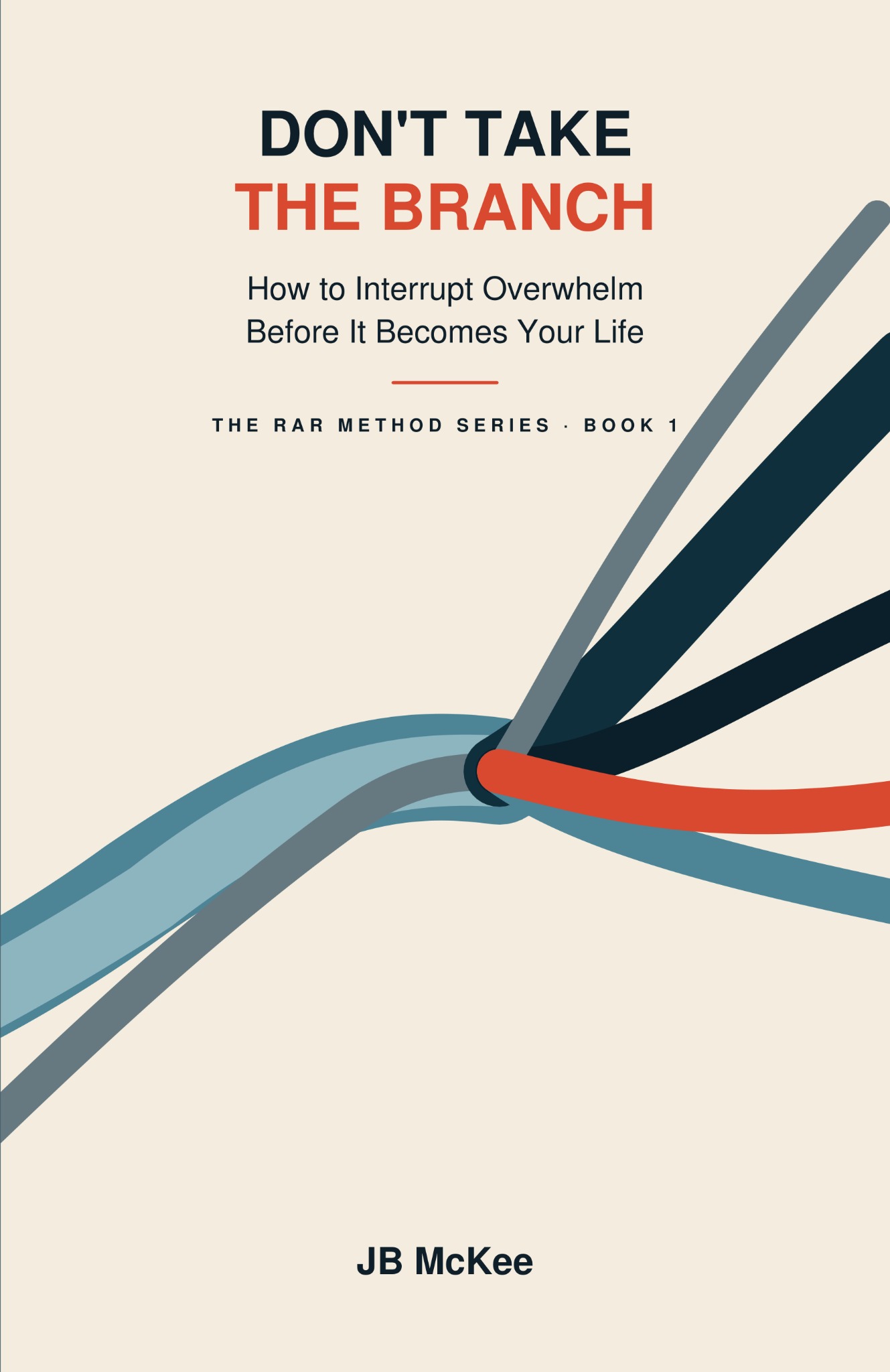
Don’t Take
the Branch.
How to Interrupt Overwhelm Before It Becomes Your Life
The RAR Method Series · Book 1
A thought can lead to another thought, carrying you farther downstream. Explore JB McKee’s book for a fuller introduction to the RAR Method and Upstream Gatekeeping.
View the book on Amazon ↗Opens Amazon in a new tab.
Before you try to get it perfect.
Does redirecting mean ignoring the problem?
No. Acknowledgment is essential. Name the real issue and decide whether it needs an action, a lesson, or a planned review. Then choose your next focus.
What if the thought comes back?
You can recognize its return, acknowledge what you have already addressed, and redirect again. A returning thought does not mean you failed.
What if I really do need to think something through?
Give the thinking a purpose: identify the question, the information you need, and the next decision. Useful thinking can be difficult. The aim is to notice when it stops making progress.
Is RAR a treatment for anxiety or other mental health conditions?
No. This site presents a self-reflection framework. Persistent distress, intrusive thoughts, or difficulties with daily life deserve qualified professional support. RAR should not replace treatment.